Learn how foreign companies can set up a subsidiary company in Kenya, including the legal requirements and ongoing compliance obligations. Discover also explains the key differences between a subsidiary and a branch office and why many foreign corporates choose a subsidiary structure for long-term operations in the Kenyan market.
Foreign companies entering the Kenyan market must choose the right structure for establishing a local presence. For many long-term investors, a subsidiary company is the preferred option because it creates a separate Kenyan legal entity that can own assets, hire employees, enter contracts, open bank accounts, and operate independently from the foreign parent company.
Here’s how to set up a subsidiary company in Kenya, including the documents required and the common mistakes foreign corporations should avoid when establishing operations in Kenya.
Also Read: How to Register a Company in Kenya from the UK, USA, Canada or Australia
What Is a Subsidiary Company in Kenya?
A subsidiary company is a company incorporated in Kenya whose shares are owned wholly or partly by another company, known as the parent company. The parent may be incorporated in the United States, the United Kingdom, the European Union, the Middle East, Asia, or any other jurisdiction.
The key feature of a subsidiary is that it is a separate legal entity from its parent company. Once incorporated, the Kenyan subsidiary has its own legal identity and can:
- enter into contracts in its own name;
- own property and assets in Kenya;
- open Kenyan bank accounts;
- employ staff;
- obtain licences and permits; and
- sue or be sued independently of the parent company.
For example, if Global Manufacturing Inc. incorporated in Germany establishes Global Manufacturing Kenya Limited, the Kenyan company becomes a distinct legal entity even though the German parent owns all its shares. This separation is one of the main reasons multinational groups prefer subsidiaries for long-term operations.
Subsidiary vs Branch Office: Which Structure Is Better?
Foreign corporations frequently compare a Kenyan subsidiary with a foreign company branch office before entering the market. The choice has significant legal, tax, and operational implications.
| Subsidiary | Branch Office |
| Separate Kenyan legal entity | Extension of the foreign company |
| Liability generally limited to the subsidiary | Parent company remains directly liable |
| Can have local or foreign shareholders | No separate shareholding structure |
| Often viewed more favorably by local banks and customers | May be perceived as a temporary presence |
| Suitable for long-term investment and local operations | Suitable for limited or temporary activities |
| Easier to bring in local investors later | More difficult to restructure ownership |
A branch office can work for companies carrying out short-term projects, representative activities, or limited operations. A subsidiary is usually the stronger option for businesses planning to build a local customer base, hire employees, hold assets, or expand across the East African region.
How Much Does It Cost to Register a Subsidiary Company in Kenya?
A subsidiary is registered as a private limited company in Kenya, so the standard company registration fees apply even where the company is wholly owned by a foreign parent company. The total cost will vary depending on the company’s share capital and whether you engage a professional to handle the registration process.
| Cost Type | Fees (KES) | Frequency | Recipient |
| Name reservation | KES 150 | One-time | BRS via eCitizen |
| Official incorporation fee | KES 10,650 | One-time | BRS via eCitizen |
| Stamp duty on share capital | 1% nominal value (minimum KES 200) | One-time | KRA |
| CR12 Certificate | KES 650 | Per request | BRS via eCitizen |
| eCitizen fee | KES 50–100 | Per transaction | eCitizen platform |
| Legal or agency fees | KES 15,000–50,000 | One-time | Private lawyer, company registration firm, or advisory provider |
Can Foreigners Own 100% of a Kenyan Subsidiary?
Yes. In most sectors of the Kenyan economy, foreign investors can own 100% of the shares in a Kenyan subsidiary company. There is generally no requirement for a Kenyan citizen to hold shares in an ordinary private limited company.
Foreign nationals can also serve as directors and shareholders of the subsidiary. However, certain regulated sectors such as telecommunications, insurance, aviation, mining, or media may have additional licensing or local participation requirements imposed by sector regulators.
Kenya also requires companies to disclose their beneficial owners, meaning the natural persons who ultimately own or control the company. This requirement applies even where the immediate shareholder is a foreign corporate entity.
Key Requirements Before Incorporation
Preparing the correct documents before starting the registration process helps avoid delays, especially where foreign corporate shareholders are involved.
Parent Company Documents
The foreign parent company will usually need to provide:
- its Certificate of Incorporation or equivalent company registration document;
- its constitutional documents, such as the Memorandum and Articles of Association or equivalent charter documents;
- a board resolution approving the establishment of the Kenyan subsidiary and authorising the shareholding; and
- identification details of the authorized representatives signing the Kenyan incorporation documents.
Documents issued outside Kenya may need to be notarized, certified, apostilled, or legalized depending on the country of origin and the requirements applicable at the time of filing.
Kenyan Company Information
You will also need the proposed Kenyan company name, the registered office address in Kenya, details of the directors and shareholders, the shareholding structure, and the beneficial ownership information required by the Business Registration Service (BRS).
Step-by-Step Process for Setting Up a Subsidiary in Kenya
Once the parent company documents and ownership structure are in place, the next step is completing the incorporation process in Kenya. Here’s how to do it the right way.
Step 1: Conduct a Company Name Search
The process begins with a company name search Kenya application through the eCitizen BRS. You should prepare several alternative names in case your first choice is unavailable or rejected.
Step 2: Reserve the Company Name
Once BRS approves the proposed name, it is reserved for a limited period, giving you time to complete the incorporation process. Delays beyond the reservation period can result in the name becoming available to other applicants.
Step 3: Prepare the Incorporation Documents
The incorporation package normally includes the Memorandum of Association, Articles of Association, statement of nominal capital, registered office details, director and shareholder information, and beneficial ownership disclosures.
Step 4: File Through eCitizen BRS
The documents are submitted electronically through the eCitizen BRS portal. Foreign corporate shareholders often require additional supporting documents and certifications, so careful document preparation is important.
Step 5: Obtain the Certificate of Incorporation
After BRS approves the application, it issues a Certificate of Incorporation. At this point, the Kenyan subsidiary legally exists as a separate company.
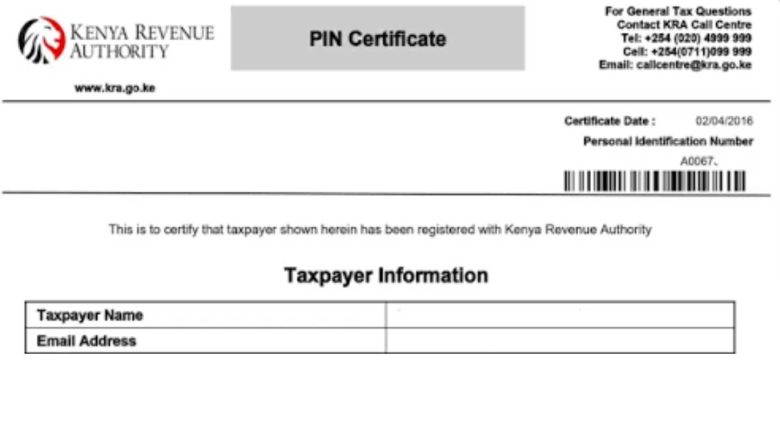
Step 6: Apply for a Company KRA PIN
The subsidiary must then obtain its own KRA PIN through the iTax Kenya system. The parent company’s foreign tax number cannot be used in place of a Kenyan company PIN.
Step 7: Register for Additional Taxes
Depending on the nature of the business, the company may need to register for Corporation Tax, VAT, PAYE, and other applicable tax obligations.
Step 8: Open a Corporate Bank Account
Kenyan banks will typically require the Certificate of Incorporation, KRA PIN certificate, incorporation documents, board resolutions, beneficial ownership information, and identification documents for directors and authorized signatories. Banking due diligence for foreign-owned companies can take several days or weeks, so it is advisable to start the process early.
How Long Does It Take to Set Up a Subsidiary?
The timeline depends on the quality of the documents provided and whether foreign certifications are required. A realistic estimate for a well-prepared application is:
- Company name reservation: 1–3 working days
- Company incorporation: 3–7 working days
- KRA PIN registration: 1–3 working days
- Corporate bank account opening: 1–3 weeks
Where foreign documents require notarization, apostille, or legalization, the overall process can take longer, so early preparation is highly recommended.
Common Mistakes Foreign Companies Make
At Ultimus Advisory, we regularly assist foreign corporates establishing operations in Kenya, and we often see the same avoidable mistakes causing delays, additional costs, and compliance complications. Identifying these issues early can make the incorporation process significantly smoother and reduce the risk of problems after the company has been registered.
- Choosing the wrong legal structure: Some companies register a structure that does not provide the level of liability protection, local contracting flexibility, or long-term investment support they actually need.
- Submitting uncertified foreign documents: Incorporation documents issued outside Kenya may need to be notarised, apostilled, or otherwise certified before they can be accepted by the Business Registration Service or local banks.
- Ignoring beneficial ownership requirements: Kenyan law requires companies to disclose the natural persons who ultimately own or control the business. Incomplete or inaccurate beneficial ownership information can delay incorporation and banking approvals.
- Underestimating bank due diligence: Banks frequently request detailed information about the parent company, source of funds, group ownership structure, and authorised signatories before opening a corporate account.
- Delaying KRA registration: Incorporating the company without promptly obtaining a company KRA PIN and registering for the relevant tax obligations can create difficulties when opening bank accounts, signing contracts, applying for licences, or hiring employees.
- Using unrealistic share capital structures: Very low share capital may raise questions from banks, regulators, suppliers, or immigration authorities about the company’s operational capacity and commercial substance.
Foreign investors who prepare their corporate documents properly, disclose ownership information accurately, and complete tax and banking registrations promptly are far more likely to establish a smooth and compliant subsidiary in Kenya.
Why Many Foreign Corporates Use Professional Incorporation Support
Setting up a Kenyan subsidiary involves coordinating company law, tax registration, beneficial ownership compliance, banking requirements, and often cross-border document certification. Professional support helps ensure these steps are handled correctly and in the proper sequence.
At Ultimus Advisory, we assist foreign corporates with company name searches, eCitizen BRS filings, preparation of Memorandum and Articles of Association, KRA PIN registration, beneficial ownership filings, company secretarial support, and ongoing corporate compliance services. Our team works with foreign investors to structure Kenyan subsidiaries efficiently and minimise delays caused by incomplete documentation or procedural errors.
Get in touch today and let Ultimus Advisory help you establish your Kenyan subsidiary with the right structure for long-term growth.
FAQs
Can a foreign company own 100% of a Kenyan subsidiary?
Yes. Most sectors allow full foreign ownership of a Kenyan private limited company, although regulated industries may have additional requirements. Before investing, it is advisable to confirm whether your industry is subject to any licensing, local participation, or sector-specific restrictions.
What is the difference between a subsidiary and a branch office in Kenya?
A subsidiary is a separate Kenyan legal entity with limited liability, while a branch office is an extension of the foreign parent company and does not have a separate legal personality. A subsidiary is generally better suited for long-term operations because it can own assets, enter contracts, and build a local operational presence in its own name.
How much share capital is required when registering a subsidiary in Kenya?
There is no general minimum share capital requirement for an ordinary private limited company, although regulated sectors may impose specific capital thresholds. Choosing a realistic share capital amount can also make banking, licensing, and immigration processes easier by demonstrating the company’s intended operational scale.
Is a local physical office required?
A Kenyan company must have a registered office address in Kenya for official correspondence and statutory records. The address can be a commercial office, serviced office, or another lawful business address capable of receiving official notices and maintaining company records.
How long does incorporation of a subsidiary take?
A straightforward subsidiary incorporation takes one to two weeks, excluding any delays related to foreign document certification or banking procedures. Preparing properly certified parent company documents in advance is one of the most effective ways to keep the process moving quickly.